
Welcome to my little corner of the internet! This is where I share stories from my own journey alongside practical, evidence-based nutrition insights. Think of it as part diary, part resource hub, where learning meets real life
Food Freedom: Or, How I Stopped Letting Ice Cream Bully Me
A few years ago, if you had opened the pantry or freezer, you would’ve thought I hated fun. No chips, no ice cream, nothing “dangerous.” Not because I didn’t like them — please. I loved them. Loved them in the way that, if they ever entered the house, I’d eat them faster than you can say “family-sized bag.”
The ice cream tub and I - not a healthy pairing. I’d eat until I felt sick, then keep going — because apparently “too much” wasn’t enough. Afterwards, I’d sit there in my food coma, promising myself that next time I’d have more self control. Spoiler: That never happened. That meant that those foods were off limits and I couldn’t buy them, because obviously I would have to eat the whole thing in one or two sittings. I truly could not even fathom that there was a way to not do that. And hearing about people who would only eat one serving of something and then they felt like that was enough? That didn’t make sense. There was probably something wrong with them (or me?) because that was absolutely not something that I could ever do.
With that said, it meant I had to avoid buying foods I couldn’t control myself around. Absolutely not, they could not come in the house because I knew what would happen. And yet… I’d always cave. Or someone would bring chips over (honestly, rude), and suddenly it meant it was time for the inevitable free-for-all. My logic went something like: This is my one and only chance to eat this EVER AGAIN. Better eat enough to last me through the apocalypse. Shockingly, this strategy never worked. Instead, cue the stomach ache, the guilt, and the eternal vow to “start fresh tomorrow.”
Looking back, the problem wasn’t the food. The problem was the drama I’d attached to it. Tell yourself you “can’t” have something, and suddenly your brain turns into a rebellious teenager sneaking out of the house. You didn’t even want it five minutes ago, but now? Now it’s all you can think about. Food works exactly like that “Do Not Touch” button. And if you’re me, not only do you touch the button, you slam it repeatedly.
These days, I don’t bother calling food “good” or “bad.” Food is just… food. Some things make me feel energized and healthy, others make me feel warm and happy (hello, nachos). Both matter. The way I broke the binge cycle wasn’t by having more rules — it was by ditching them.
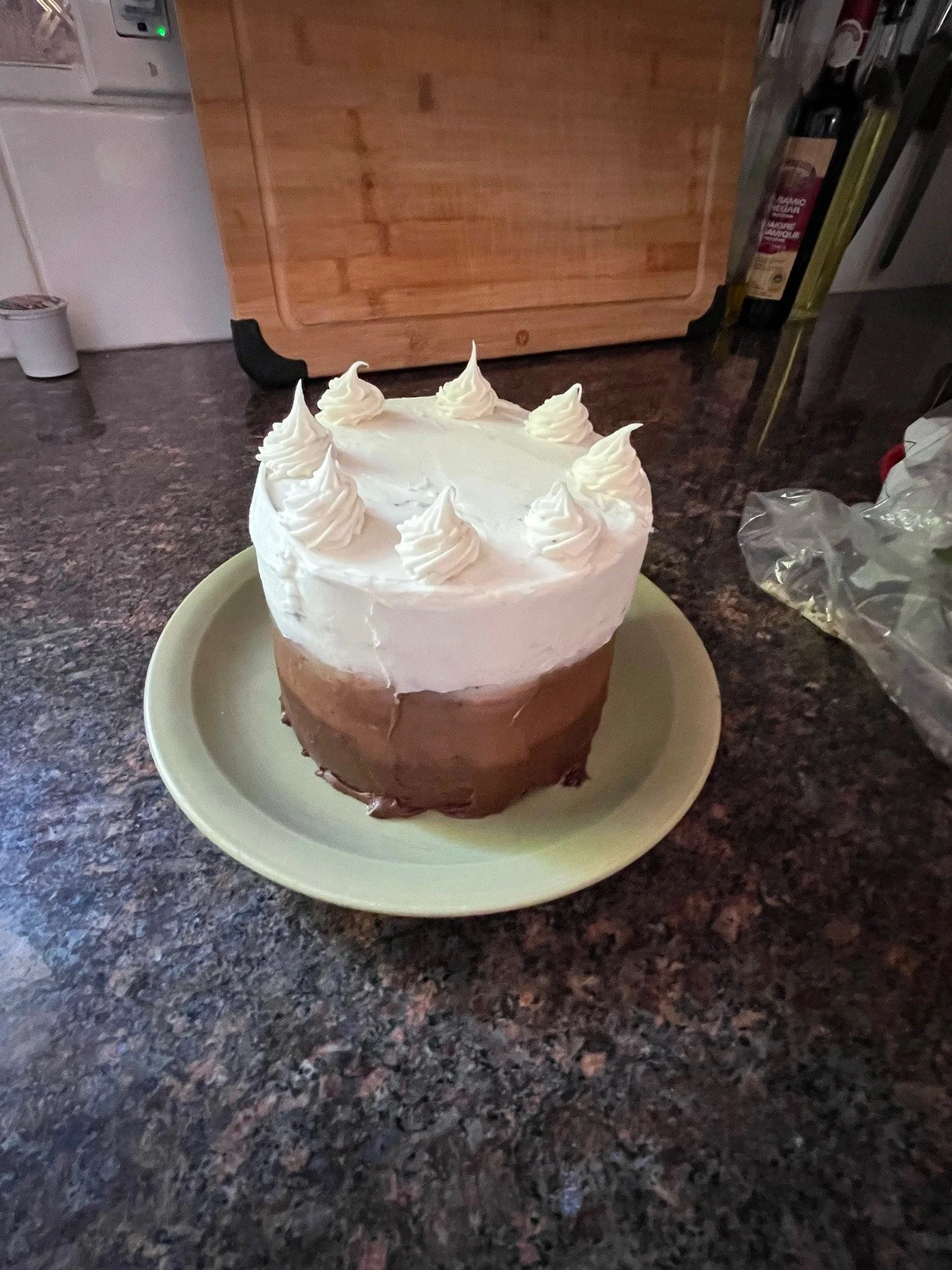
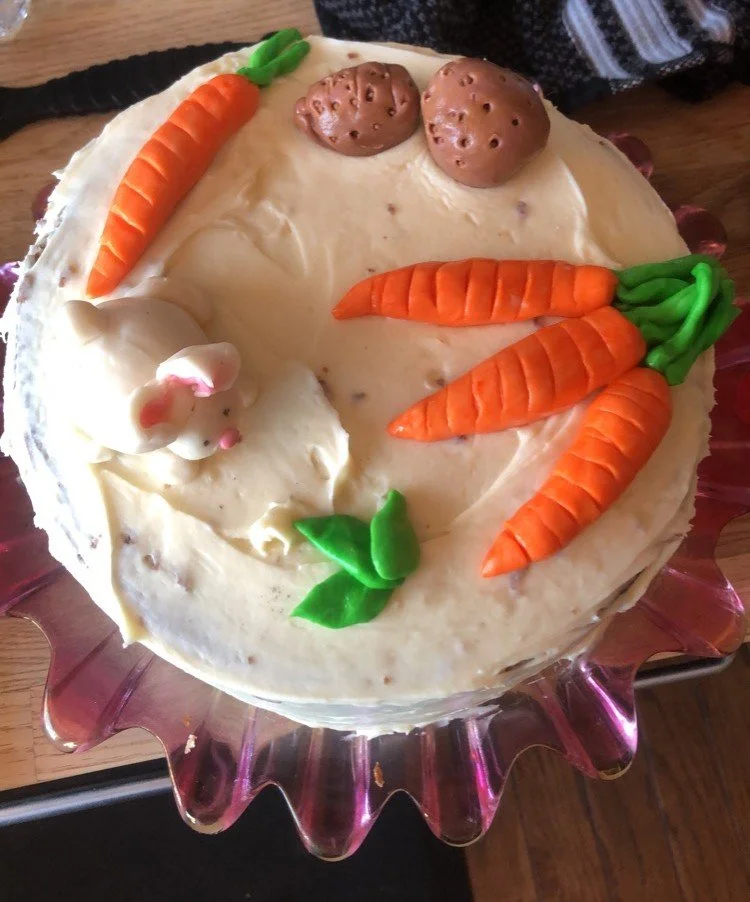
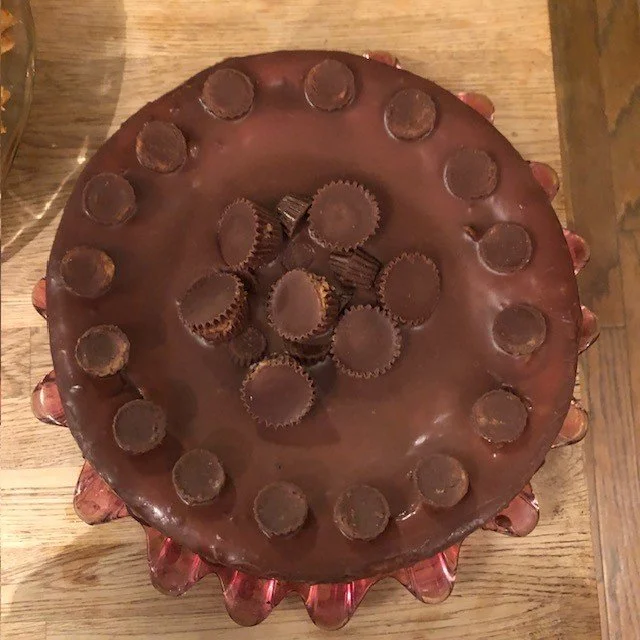
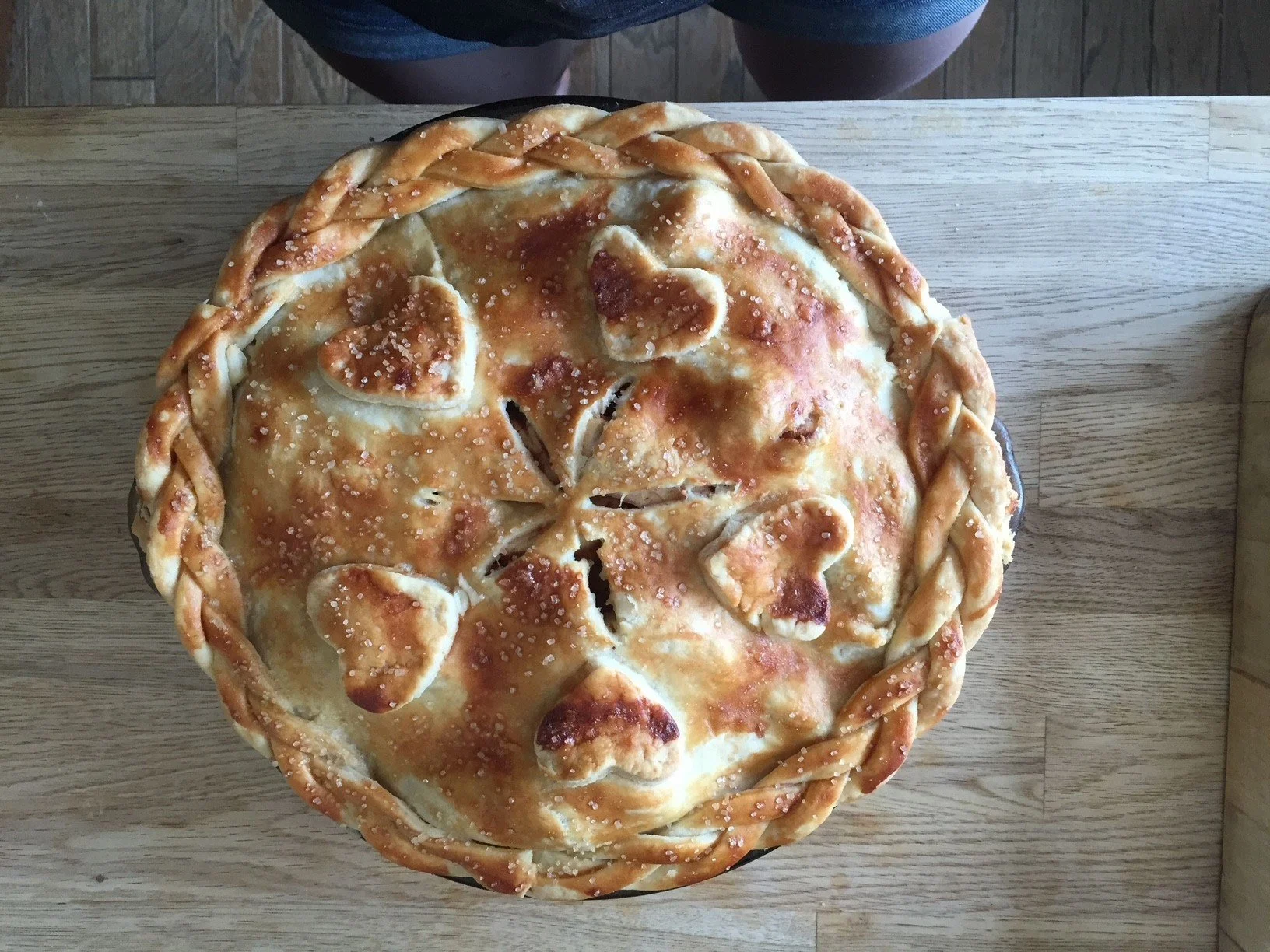
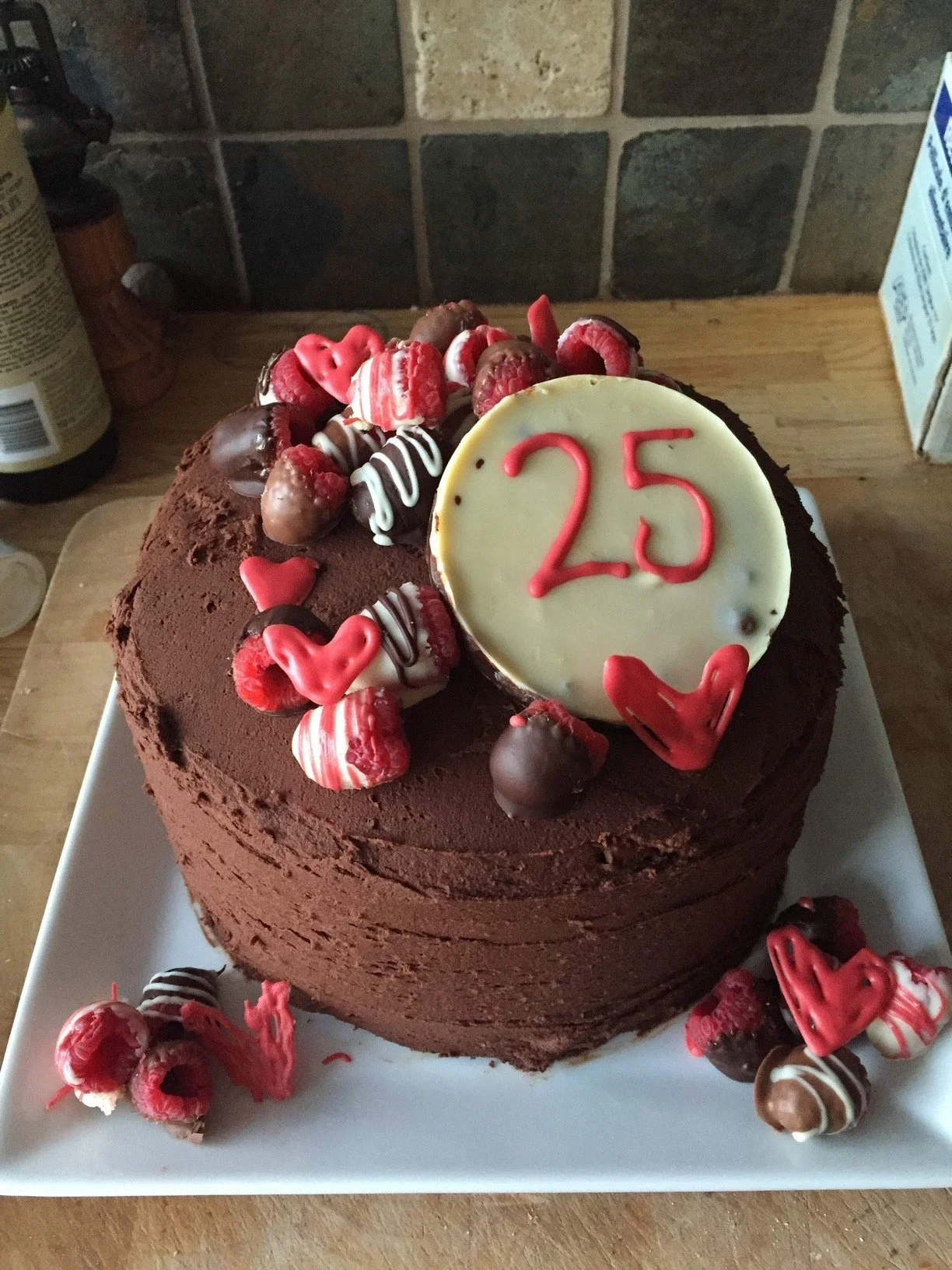
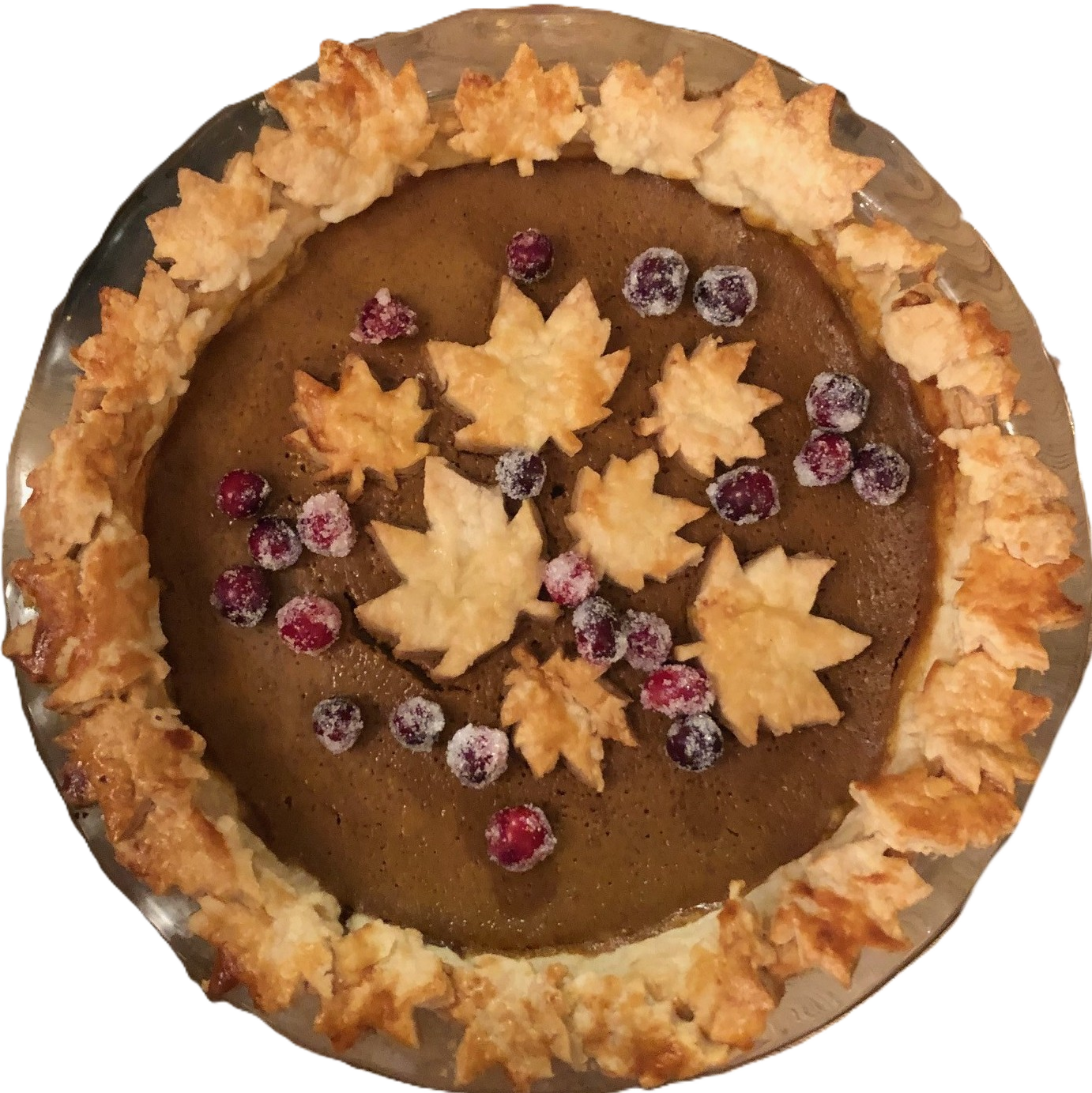
I love baking, but it used to be anxiety inducing because I knew I’d make myself sick binge eating whatever I made.
Being able to make things without stress has been a huge win!
At first, keeping “forbidden” foods in the house felt like walking around with a live grenade in my pantry. And to be honest, it wasn’t a choice I made. When I moved in with my partner (who always has snacks around) I found my stress around food went way up, because the off limits foods were always there, and always very accessible. I suspect if we hadn’t started living together, I would probably still be abiding by the same food rules and binge-restrict cycle as before, because I never believed that was something that could change. And I will admit, in the first few months I ate wayyyy more of those foods than usual, and often way more than what felt good. In my mind they were still novel, and one day wouldn’t be there when I got my way and convinced him to stop buying them.
I learned that you in fact cannot cannot separate a man from his chips, and interestingly, little by little, the novelty wore off. The ‘bad; snacks stopped feeling like contraband and started feeling like… food. I could have a scoop of ice cream and then go about my day. I could eat chips with a sandwich and then — brace yourself — actually put the bag away.
Once foods were no longer good or bad, or allowed vs not allowed, the power they held wore off. Do I still sometimes have a snack binge and feel not great after? Yeah, of course. But more often than not, I can take a handful of chips or a mug of ice cream (if you eat ice cream out of a bowl try using a mug - I swear its better) and feel completely satisfied with that. Honestly so weird, but so nice.
Food freedom doesn’t mean living on chips and ice cream 24/7 (though some nights, no regrets). It doesn’t mean ignoring nutrition. It means you can actually trust yourself around food — no more guilt, no more panic, no more weird mental gymnastics every time you walk past the snack aisle.
Here’s what helped me get there (besides sheer stubbornness and lots of trial and error):
I ditched the food labels. No “good” or “bad.” Just how does this make me feel?
I gave myself full permission to eat the foods I’d always restricted. It absolutely is scary, but it takes away the need to eat as much as possible when these foods are available. I kept them around until they stopped feeling like forbidden treasure.
I reminded myself that food isn’t just fuel — it’s comfort, connection, joy, and culture.
I ate when I was hungry. Sure, avoiding meals because you are busy feels like a great idea (you’ll eat fewer calories during the day, perfect right?), but it rarely works. It’ll just end with excess hunger in the evening, the type that is hard to control and tells you that you need a ton of snack foods, and often results in overeating and discomfort.
I paid attention to how I felt when I ate - at what point was I no longer hungry? Did I actually want to keep eating, or was I just eating because it was there? Did I feel bloated and uncomfy after, or satisfied and energized?
I remembered that food is food. One good or bad meal or day does not make a difference, its the average of what we do long term. I stopped beating myself up over ‘bad’ foods, and this helped reduce the urge to binge because ‘I had already ruined the day, so might as well start again tomorrow.’
It took time, and a lot of unlearning, but eventually I got to the point where ice cream stopped bullying me. Now I get to enjoy it because I want it, not because it’s my “one last chance.”
That’s food freedom: peace, not perfection.
And honestly? It tastes even better than ice cream. (Okay… almost.)

How I (Unexpectedly) Became a Registered Dietitian
It all begins with an idea.
If you had told 14-year-old me that I’d one day make a career out of nutrition, I would have laughed… probably while running on a treadmill for the third time that day and refusing to eat anything that wasn’t green.
My “nutrition journey” didn’t start with a wholesome love of food or dreams of helping others. It started with body image worries by age 10, which spiraled into something worse by my early teens. Looking back, I’d diagnose myself with the purging subtype of anorexia — heavy food restriction, excessive exercise, and multiple daily rounds of making myself throw up.
After losing about 25 pounds, I started hearing comments about how “healthy” I was. My status as healthy was coming only from my extremely restricted food intake, rigid exercise habits, and increasingly smaller body. As a 14-year-old, I took that as the highest compliment - the smaller you are, the better, right?
An unfortunate surprise about making yourself throw up is… it gets harder over time. Your body starts fighting back. Which means you either stop, or you get increasingly creative with what you try. At first you can just use a finger, then two, then you use a toothbrush, and on it goes. I eventually reached a point where I had to decide: keep pushing my body to do something it very much did not want to, or try to get a handle on what was happening. I’m very grateful I chose the latter.
That’s not to say my eating disorder magically vanished. My disordered eating and notable body dysmorphia continued well into my 20s. These things linger — sometimes quietly, sometimes loudly — but over the years, I’ve learned how to manage it. I’ve come to accept that it will likely always be in the background, an interesting part of me that is always there and ready to come out when circumstances allow for it. Luckily, these days I can look at it far more objectively… and with a lot more compassion for my younger self. Numbers no longer send me into a tailspin, I don’t feel out of control around food, and I can look at myself with far more kindness than younger me ever could.

Me in my early 20’s, looking at pictures like this and being convinced I was fat, restricting food, and using exercise as a means to get smaller.
One unexpected turning point came when my partner convinced me to start going to the gym. I wanted nothing to do with it — it felt intimidating, uncomfortable, and like something “other people” did. But I agreed (reluctantly) and, over time, my confidence grew. Eventually, I felt comfortable going on my own — though still only at very early hours to avoid crowds. Strength training, especially, shifted my mindset in ways I didn’t expect. I started to care less about how small I could make my body, and more about what my body could do. I celebrated lifting heavier weights, running farther, and recovering faster.
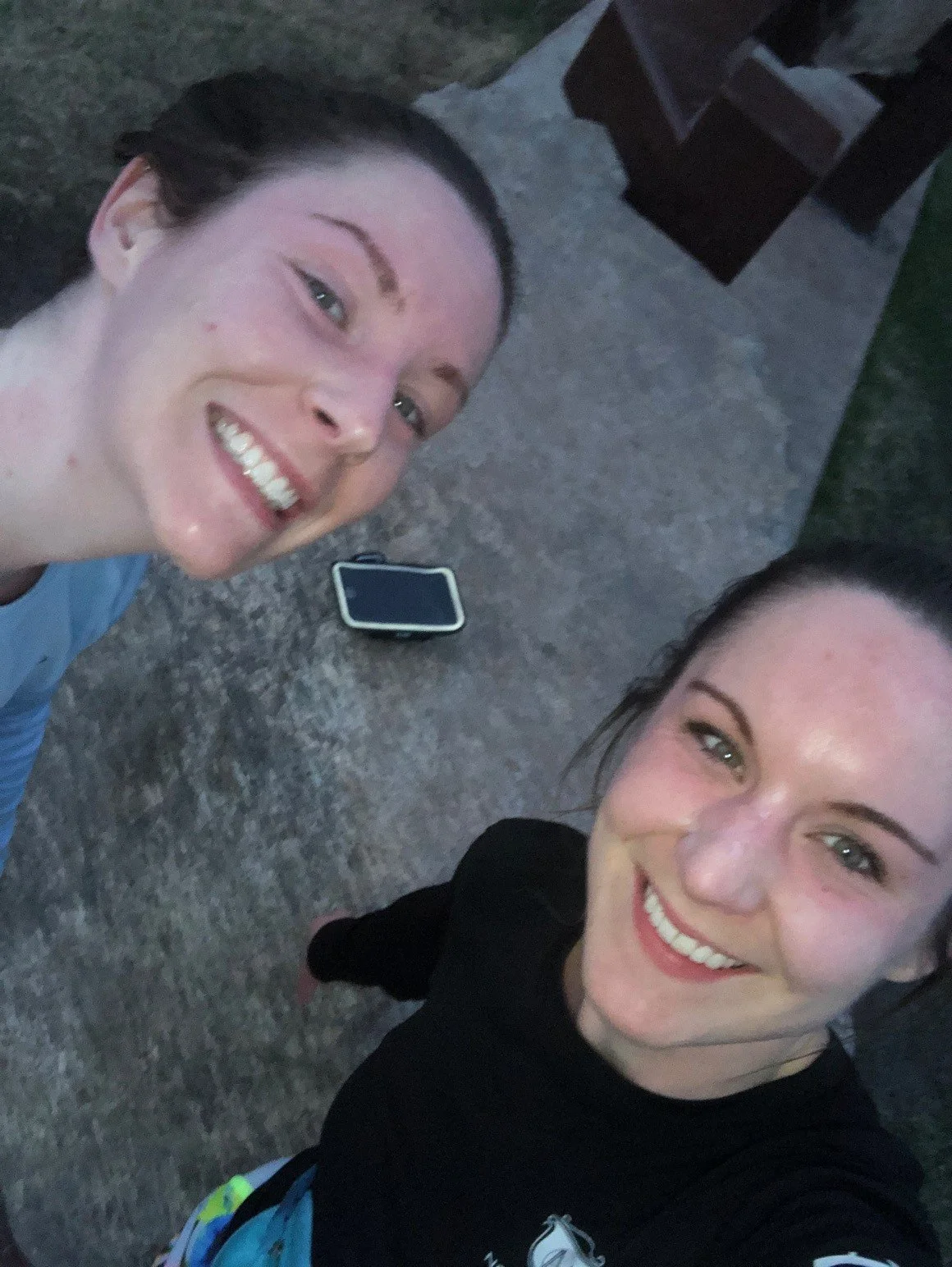
Traditional end of run selfie - now my motivation for exercise is to see what my body is capable of doing, not seeing how little space I can occupy. Let me tell you, it makes it a lot more fun (as does having a running buddy!)
That shift also changed how I saw food. Instead of something to restrict, it became fuel — protein, fiber, and healthy fats to help me feel good, train harder, and recover well. It was the beginning of a much healthier, more functional relationship with both food and my body.
Somewhere along the way, my curiosity about nutrition deepened. I went from calorie-counting to diving into the science — how nutrition impacts strength, energy, blood sugar, longevity… all of it. Podcasts with experts like Dr. Rhonda Patrick opened my eyes to just how fascinating (and complex) the field really is.
After finishing my neuroscience degree, I wasn’t sure what I wanted to do next. My mom offhandedly mentioned that I “liked those nutrition podcasts” and should maybe go into nutrition. At the time, I didn’t even know what a dietitian was. But after some research, I realized I could study at the University of Alberta and start learning more.
Through a lot of self-reflection, I recognized that I didn’t just want to heal my own relationship with food — I wanted to help other people feel their best. Whether that’s through intentional nutrition, building strength, managing blood sugar, or taking the fear out of eating altogether, this is the work I love doing. And of course, let’s be honest — no one loves snacks more than I do, so a job where I get to talk about snacks? Does it even get better??
It’s been a winding road to get here, but every twist and turn has shaped the way I now practice as a Registered Dietitian — with equal parts science, empathy, and the firm belief that food should be something that supports your life, not something that controls it. If I could go back and change things I don’t think I would, even though not having to deal with an eating disorder (and the anxiety and depression that it stems from) would make my life soooo much easier. But while my life thus far would have been simpler, I strongly attribute my compassion, empathy, and patience to what I have learned going through mental health struggles myself. Without that, I certainly wouldn’t be the person I am today, and I don’t think I would trade that for a more straight forward path here.

A Master (of Rats)
It all begins with an idea.
I never really wanted to do research. During my neuroscience degree (and honestly, most of my dietetics degree), I had zero interest in it. Research sounded… boring. But then I enrolled in a course on the gut microbiota to fill up space in my schedule, and suddenly found myself fascinated. The microbiota is incredible and impacts everything we do (did you know humans have more bacterial cells in their bodies than human cells?? Are we even human? That’s probably a question for my philosopher partner lol) — our behavior, metabolism, growth, immunity, and even mental health. And the best part is that we barely even understand it yet, which means maybe I could actually contribute to a very cool and growing field. For the first time, research didn’t sound like the worst idea — especially if I could do grad school and keep working (because, money).
It also helped that my twin sister had just finished her MSc and very confidently (and repeatedly) told me: “You should do a Master’s — it’s easy, you barely have to do any work.” Easy? Barely any work? You get paid? AND I could keep working on the side to make more money?? Perfect. Sign me up.
So, I applied to work with Dr. Raylene Reimer and ended up with a project looking at how birth mode (vaginal vs. C-section) impacts the gut microbiota, how the early-life gut microbiota affects development and risk of anxiety and depression, and whether nutrition could help fix these abnormalities. Nutrition, gut bacteria, and mental health? Perf. But let me tell you… it was not easy. And working 5-7 days a week while I did it didn’t help, but again, I am not rich so you do what you have to. Nonetheless, it was fun, rewarding, stressful, very cool, and extremely exhausting. I got to design my own study from scratch, build materials, collect and analyze data, run behavior testing, and care for around 100 rats. And, if I do say so myself, I think I found some pretty cool stuff (more on that later).
One of the most unexpected outcomes of my MSc was discovering how much I loved the rats. My participants weren’t humans — they were rats, and it turns out rats are the sweetest, loveliest little creatures. Because of the type of behaviour testing I did I needed to make sure they were comfy with me, so that meant handling all of them every day or two so they knew we were friends. I adored caring for them and getting to know their little personalities. The flip side? “Sacrificing” (AKA murdering) them for tissue collection. That part was awful — there were always tears involved and it gave me anxiety and nightmares for months. While I loved working with rats, I certainly never want to be in a position where I have to hurt one again.
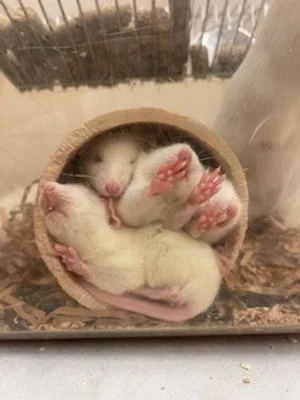
Adorable babies cuddling in their tube
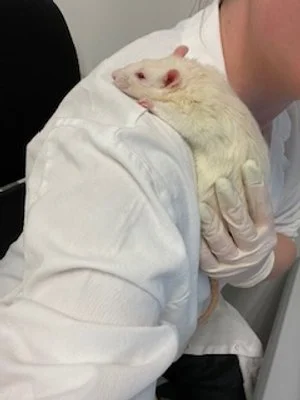
Quick snuggle during body composition analysis
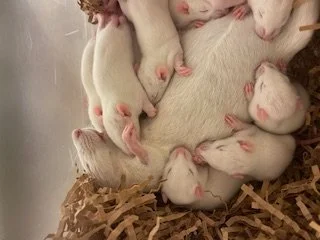
A sweet mama feeding her babies
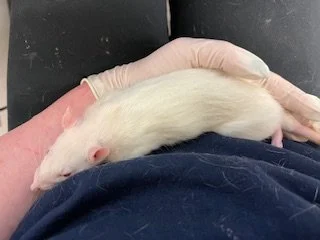
Christmas eve with the rats - no complaints about hanging out with these little guys though
Grad school also came with some adventures. There were stretches where I had so much work I literally didn’t have time to go home before I had to be back in the lab. Most people in that situation would crash at a friend’s place near campus (especially since I had one who offered). But where’s the fun in that? Instead, I often just slept in my car. Fine in the summer… a little less fun in -40°C winters… and definitely less fun the night campus security woke me up at 3:30 a.m. (after my glorious 75 minutes of sleep) to inform me I wasn’t allowed to sleep in the parking lot. They were very concerned I was homeless. And while I tried to convince them otherwise, the pile of blankets, clothes, a mattress, and — yes — a kettle in the back seat didn’t exactly strengthen my case. Luckily, they didn’t push it and eventually just left me alone.
Despite the exhaustion, it was an amazing journey. I met incredible people and even a long-lost relative (who, fun fact, worked in the same rat building as me, mostly at night to avoid people). I learned how to perform a C-section on a rat, helped milk rats, worked in a germ-free facility where animals have absolutely no bacteria in or on their bodies, and even started (loosely) plotting to convince the government of Alberta that rats are not evil. Alberta is famously “rat-free” and has an actual rat patrol — yes, really — but maybe one day research rats could be adopted out, just like mice, hamsters, and rabbits are.
Grad school turned out to be nothing like the “easy, no work” version my sister promised me — but it was so much better. Exhausting, yes, but also eye-opening, inspiring, and completely worth it. And one of the biggest lessons I learned? I want to keep doing it. So stay tuned to see if I get accepted to my PhD — and hopefully, this time, with far fewer nights sleeping in my car.